Congress general secretary Rahul Gandhi today held a very tactical press conference in Varanasi, hours ahead of the end of the election campaign for the first phase of polls in Uttar Pradesh, where stake is very high for the projected--but-disinterested future prime minister of India for Congress party. The press briefing was on expected lines with expected answers but with a renewed anger on display. This apart, today's press conference has four meanings, as I have perceived.
One, Rahul Gandhi has conceded defeat of his party in the upcoming polls just ahead of the first phase of voting. He categorically admitted that he is now focused on the 'course' and not on the result of the assembly elections. It is like accepting that his party stands no chance of forming a government in the state, as being predicted by all the poll pundits and much contrary to Congress's and his own tall claims of returning to power in Lucknow. Today's press conference may work in favour or may hamper his chances more than ever. It could be his last ditch to make an appeal to the voters that he is genuinely concerned about the progress of Uttar Pradesh, but his party can't muster majority in the present political scenario. Anyways, it's a defeat conceded by the commander of the Congress party.
Second, Rahul Gandhi seemed to be closing the doors of an alliance with either the BSP or the SP post-poll. He accused both these parties and also the BJP of providing 'criminal' governance in Uttar Pradesh in past two decades. Should his come to a pass of forging an alliance with either of the SP or BSP, he will have to eat his words, which Rahul Gandhi has not done till date. But, it also leaves Congress in a possible dilemma as to what it would do if BJP gets enough seat to tilt balance in anyone's favour. Will the Congress extend outside support to either the SP or the BSP, should it intends to keep the BJP at bay?
Third, Rahul Gandhi termed BJP a non-existing force in UP. For any political observer, it is too far fetched even to comment on the statement. But, Rahul Gandhi's soaring temper during the press conference while dealing with questions concerning the BJP was more than apparent. Was it an anger resulting due to frustration, that the BJP-led opposition handed over to the Congress in Parliament over the Lokpal Bill? He accused LK Advani of only touring in the name of corruption and not acting. He also challenged Advani and Co that he would get a constitutional Lokpal enacted by Parliament whether they like it or not. But, Rahul Gandhi is wise enough to understand that until his party gets a majority in UP, he can't have his way in the Rajya Sabha and thus the constitutional Lokpal may not be a reality. So, his renewed anger at the BJP, which is according Rahul Gandhi non-existent in UP, may have its source in the Lokpal fiasco.
And, fourth, Rahul Gandhi evaded the question on black money but focused on black flags to hit out at Baba Ramdev, who is obviously not a political force. Does Rahul's outburst at Ramdev signal a bigger trouble for the yog merchant? Only time will tell.
Rahul Gandhi And Uttar Pradesh

 A sapien. Friend. Accidental journalist. Believe God is the greatest creation. Convinced that words, stories built human civilisation with the help of communication technology. Live in a metro with a heart of small town. Dreamer. Lover of humans, other natural things. Poetry. Philosophy. Lazy. Leisure. Beholding eyes for beauty. Life is a sentence that ends at a full stop.
Team India: Put Batting Order in Order
There has been an intense debate going on as to who should come at number 6 position for Team India. The choice ranges from VVS Laxman to Rohit Sharma and from MS Dhoni to Virat Kohli amidst talks about Yuvraj Singh's form and fitness and Suresh Raina's technical flaws. But, first of the team management needs to think why does this position be thought of so much importance when cricket is about scoring runs and taking wickets. In short, every wicket is equally important for the team's cause. If your top five score runs at a healthy average in each innings you don't really bother about the performance of the player coming at number six. After all he is the sixth choice of your batting order depending upon his ability and experience to contribute to team's fortune.
If the top five fail, one cann't really expect that the number six will wear a magic wand to take the falling fortunes of the team to safety. This takes us back to the golden rule of the game of cricket that after the openers order of the batsmen should be decided on the rigorous parameters of batting. That is, the best batsman in the condition should come at number three. This man should also be the most perfect batsman technically. He should be followed by a more balanced batsman at number four, then the next best should come at number five and then the number six should be considered. The number six can not be the Man Friday of any team. His ability may add value to the team but he can not be expected to anchor the ship and become a sailor when ship is off the hook.
The cricketing logic says that the batsmen coming in the order of their form and ability would be best for a team. Team India goes through troubled times only when this logic is broken either by the dip in form of the batsmen fixed for the spot or due to the choice of wrong batsman for a position. At this juncture of its journey, Team India is poised with the presence of heavily experienced and overtly talented youngsters. If Team India prefers to look for a secured future then, it should disturbed the 'age-old' batting order by shuffling Rahul Dravid and Sachin Tendulkar a bit. If Rohit Sharma and Virat Kohli are the ones to succeed the two legends, one of them should be asked to come ahead of Dravid and the other ahead of Sachin Tendulkar to make sure that the two prodigious talent bat for the maximum length with the legendary talents.
VVS Laxman, on his part, seems to have gone past his prime and looks to be suffering from Ganguly syndrome. He is not sure of his batting prowess and mental techniques. For a team willing to go through a smooth transition, MS Dhoni should come ahead of Laxman, who may take it as a challenge and get back to his rhythm. So, the batting order after openers, should be something like this Virat Kohli/Rahul Sharma, Rahul Dravid, Kohli/Sharma, Sachin Tendulkar, MS Dhoni and then the tailenders. This order at the expense of VVS Laxman, which seems unlikely. So, if only one of Kohli or Sharma could be given place in the playing 11, they could be rotated till one of them starts showing consistency. And, if Yuvraj gets fit, he can replace Laxman if selectors does not get overwhelmed by the reputation of the Very Very Special batsman, who has written scripted so many victories for an emergent Team India. Yuvraj with his improved sense of bowling can fill the place of number seven test batsman provided MS Dhoni takes his own batting more seriously in the longer version. Moreover, sooner or later, the selectors will also have to find a place for Suresh Raina. He can not wait for too long.
If the top five fail, one cann't really expect that the number six will wear a magic wand to take the falling fortunes of the team to safety. This takes us back to the golden rule of the game of cricket that after the openers order of the batsmen should be decided on the rigorous parameters of batting. That is, the best batsman in the condition should come at number three. This man should also be the most perfect batsman technically. He should be followed by a more balanced batsman at number four, then the next best should come at number five and then the number six should be considered. The number six can not be the Man Friday of any team. His ability may add value to the team but he can not be expected to anchor the ship and become a sailor when ship is off the hook.
The cricketing logic says that the batsmen coming in the order of their form and ability would be best for a team. Team India goes through troubled times only when this logic is broken either by the dip in form of the batsmen fixed for the spot or due to the choice of wrong batsman for a position. At this juncture of its journey, Team India is poised with the presence of heavily experienced and overtly talented youngsters. If Team India prefers to look for a secured future then, it should disturbed the 'age-old' batting order by shuffling Rahul Dravid and Sachin Tendulkar a bit. If Rohit Sharma and Virat Kohli are the ones to succeed the two legends, one of them should be asked to come ahead of Dravid and the other ahead of Sachin Tendulkar to make sure that the two prodigious talent bat for the maximum length with the legendary talents.
VVS Laxman, on his part, seems to have gone past his prime and looks to be suffering from Ganguly syndrome. He is not sure of his batting prowess and mental techniques. For a team willing to go through a smooth transition, MS Dhoni should come ahead of Laxman, who may take it as a challenge and get back to his rhythm. So, the batting order after openers, should be something like this Virat Kohli/Rahul Sharma, Rahul Dravid, Kohli/Sharma, Sachin Tendulkar, MS Dhoni and then the tailenders. This order at the expense of VVS Laxman, which seems unlikely. So, if only one of Kohli or Sharma could be given place in the playing 11, they could be rotated till one of them starts showing consistency. And, if Yuvraj gets fit, he can replace Laxman if selectors does not get overwhelmed by the reputation of the Very Very Special batsman, who has written scripted so many victories for an emergent Team India. Yuvraj with his improved sense of bowling can fill the place of number seven test batsman provided MS Dhoni takes his own batting more seriously in the longer version. Moreover, sooner or later, the selectors will also have to find a place for Suresh Raina. He can not wait for too long.
A sapien. Friend. Accidental journalist. Believe God is the greatest creation. Convinced that words, stories built human civilisation with the help of communication technology. Live in a metro with a heart of small town. Dreamer. Lover of humans, other natural things. Poetry. Philosophy. Lazy. Leisure. Beholding eyes for beauty. Life is a sentence that ends at a full stop.
Misfortune, As Perceived
I had only heard about Helen Keller, the name. I never knew that she was the first deaf and blind person to earn a Bachelor of Arts degree. Helen Keller was an American author, political activist, and lecturer, who was trained by her teacher, Anne Sullivan breaking the barriers of communication channels that necessitate knowledge of spoken language.
The two combined to work out a miracle in the realm of human efforts. Helen later became a member of the Socialist Party of America and the Wobblies and campaigned for women's suffrage, workers' rights, and socialism, as well as many other leftist causes.
I am re-producing an article by Helen on emotion, perception and ways to deal with MISFORTUNE, as understood by many.


***
Misfortune cannot be conquered by furious and continuing resentment. We win victory over bereavement only when we face our loss, accept our loss, and then make our way through and beyond our loss. You ask how we make our way through it and beyond it?
We do so by deliberately re-entering the world of daily activity- the busy world of problems, duties, friendships, opportunities and satisfactions. A resentful, self pitying life is a doomed life. Only the life that picks up and starts again is victorious.
The loss of a loved one is a sorrow all of us must eventually face, and never is help more needed than during the first dark days of bereavement. The true way to mourn the dead is to take care of the living who belong to them.
The loss of a loved one is a sorrow all of us must eventually face, and never is help more needed than during the first dark days of bereavement. The true way to mourn the dead is to take care of the living who belong to them.
Believe when you are most unhappy, that there is something for you to do in the world. So long as you can sweeten another’s pain, life is not in vain.
Robbed of joy, of courage, and of the very desire to live, the newly bereaved frequently avoids companionship, feeling himself so limp with misery and so empty of vitality that he is ill suited for human contacts; and yet no one is so bereaved, so miserable, that he cannot find someone else to help in their time of need; someone who needs friendship, understanding, and courage more than he.
The unselfish effort to bring cheer to others will be the beginning of a happier life for ourselves. Often when the heart is torn with sorrow, spiritually we wander like a traveller lost in a deep wood. We grow frightened, lose all sense of direction, and batter ourselves against trees and rocks in our attempt to find a path.
The unselfish effort to bring cheer to others will be the beginning of a happier life for ourselves. Often when the heart is torn with sorrow, spiritually we wander like a traveller lost in a deep wood. We grow frightened, lose all sense of direction, and batter ourselves against trees and rocks in our attempt to find a path.
All the while there is a path- a path of faith-that leads straight out of the dense tangle of our difficulties into the open road we are seeking. Let us not weep for those who have gone away when their lives were at full bloom and beauty.
Who are we that we should mourn them and wish them back?
Life at its every stage is good, but who shall say whether those who die in the splendor of their prime are not fortunate to have known no abatement, no dulling of the flame by ash, no slow fading of life’s perfect flower.
A sapien. Friend. Accidental journalist. Believe God is the greatest creation. Convinced that words, stories built human civilisation with the help of communication technology. Live in a metro with a heart of small town. Dreamer. Lover of humans, other natural things. Poetry. Philosophy. Lazy. Leisure. Beholding eyes for beauty. Life is a sentence that ends at a full stop.
Lokpal Shame In Parliament
An unprecedented drama that went uptill midnight on Thursday in the Rajya Sabha shamefully succeeded in stalling the controversial Lokpal Bill. The Upper House of Parliament saw tearing up of a copy of the Lokpal Bill after snatching it from the hands of union minister V Narayansamy by RJD MP Rajneeti Prasad while his party supremo watched gleefully from the visitorz gallery at 11.57 pm. Another union minister Ashwani Kumar was seen only reluctantly trying to prevent Rajneeti Prasad from doing this giving speculation that the drama was orchestrated by the UPA to avoid an embarrassment on the floor of the house after it failed to muster the required numbers in its favour in the Rajya Sabha to get the Lokpal Bill passed... The opposition has made the same charge with BJP saying that the government is in hopeless minority and has lost moral right to rule.
Amid the din and oppositionz persistent demand for a ruling from Chairman Hamid Ansari on the continuance of the last sitting of the winter session, the Rajya Sabha was adjourned sine die purportedly against the majority opinion in the upper house. At the end, the Lokpal Bill could not be put to vote in the Rajya Sabha and the anti-graft bill hangs in balance with uncertainty reigning supreme.
LOKPAL: A JOURNEY
The Lokpal bill has a very intriguing of its failure in getting enacted. It was first introduced in the Lok Sabha in 1968 when Indira Gandhi was the prime minister. But, it could not be turned into an Act as the fourth Lok Sabha was dissolved. At that time, it had neither members of Parliament nor the prime minister under its ambit. The Lokpal bill was then introduced in 1971 again under Indira Gandhiz prime ministership, in 1977 under Morarji Desai as prime minister, in 1985 when Rajiv Gandhi was prime minister, in 1989 when VP Singh was the PM, in 1996 when HD Deve Gowda was the prime minister, in 1998 and 2001 when Atal Behari Vajpayee was the PM and in 2008 and last time on December 20th this year under the prime ministership of Manmohan Singh. Of all these, only VP Singh, HD Deve Gowda and Atal Behari Vajpayee agreed to put the prime minister under the ambit of the Lokpal. However, the final outcome has remained same in past 43 years and the bill is hanging fire.
Although this bill has been Achilles' heel for successive governments for decades, it is only since April this year that the Lokpal became a part of the national discourse, when a retired soldier turned social activist, Anna Hazare undertook a fast unto death at Jantar Mantar in Delhi. He and his team proposed Jan Lokpal Bill constituting the institution of Ombudsman vested with powers to investigate and incarcerate corrupt officials without government or Parliament's permission. What followed later was a confrontation between Team Anna and the UPA government and formation of joint drafting committee.
The experiment ended in a failure as the government shot down most of the recommendations by the civil society. Anna Hazare accused the government of being non-serious on the issue of fighting corruption. Anna Hazare embarked on yet another hunger strike on August 16. Eleven days later on 27th august , he ended his fast after government conveyed sense of Parliament vaguely agreeing to the basic demands of Anna Hazare.
The Lokpal bill was reworked upon by the standing committee where as many as 16 of the 30 members submitted their dissent note. The Bill was introduced in Parliament on December 20 and the session was extended for three days from December 27 to 29th for discussion and passing of the anti-graft bill. But, what happened on Thursday night during the midnight drama again puts the parliamentarians in dock with an automatic question, whether the elected representatives are serious to fight graft?
Amid the din and oppositionz persistent demand for a ruling from Chairman Hamid Ansari on the continuance of the last sitting of the winter session, the Rajya Sabha was adjourned sine die purportedly against the majority opinion in the upper house. At the end, the Lokpal Bill could not be put to vote in the Rajya Sabha and the anti-graft bill hangs in balance with uncertainty reigning supreme.
LOKPAL: A JOURNEY
The Lokpal bill has a very intriguing of its failure in getting enacted. It was first introduced in the Lok Sabha in 1968 when Indira Gandhi was the prime minister. But, it could not be turned into an Act as the fourth Lok Sabha was dissolved. At that time, it had neither members of Parliament nor the prime minister under its ambit. The Lokpal bill was then introduced in 1971 again under Indira Gandhiz prime ministership, in 1977 under Morarji Desai as prime minister, in 1985 when Rajiv Gandhi was prime minister, in 1989 when VP Singh was the PM, in 1996 when HD Deve Gowda was the prime minister, in 1998 and 2001 when Atal Behari Vajpayee was the PM and in 2008 and last time on December 20th this year under the prime ministership of Manmohan Singh. Of all these, only VP Singh, HD Deve Gowda and Atal Behari Vajpayee agreed to put the prime minister under the ambit of the Lokpal. However, the final outcome has remained same in past 43 years and the bill is hanging fire.
Although this bill has been Achilles' heel for successive governments for decades, it is only since April this year that the Lokpal became a part of the national discourse, when a retired soldier turned social activist, Anna Hazare undertook a fast unto death at Jantar Mantar in Delhi. He and his team proposed Jan Lokpal Bill constituting the institution of Ombudsman vested with powers to investigate and incarcerate corrupt officials without government or Parliament's permission. What followed later was a confrontation between Team Anna and the UPA government and formation of joint drafting committee.
The experiment ended in a failure as the government shot down most of the recommendations by the civil society. Anna Hazare accused the government of being non-serious on the issue of fighting corruption. Anna Hazare embarked on yet another hunger strike on August 16. Eleven days later on 27th august , he ended his fast after government conveyed sense of Parliament vaguely agreeing to the basic demands of Anna Hazare.
The Lokpal bill was reworked upon by the standing committee where as many as 16 of the 30 members submitted their dissent note. The Bill was introduced in Parliament on December 20 and the session was extended for three days from December 27 to 29th for discussion and passing of the anti-graft bill. But, what happened on Thursday night during the midnight drama again puts the parliamentarians in dock with an automatic question, whether the elected representatives are serious to fight graft?
A sapien. Friend. Accidental journalist. Believe God is the greatest creation. Convinced that words, stories built human civilisation with the help of communication technology. Live in a metro with a heart of small town. Dreamer. Lover of humans, other natural things. Poetry. Philosophy. Lazy. Leisure. Beholding eyes for beauty. Life is a sentence that ends at a full stop.
Food Security Bill: How Secure Is It?
The Food Security Bill is now before Parliament. The Bill aims at providing food and nutritional security to the millions of Indians. In spirit, the legislation is well aimed at wiping out hunger from the face of the second most populace nation, which has the highest number of hungry, malnourished, under-nourished population in the world. The objective of the NAC-prepared Bill is also noble because India still suffers from most basic type of poverty with almost 74 percent of children being anaemic. This bill may help fighting this. But, the food bill has raised many an eyebrow of experts. 
The critics claim that the food security bill is the worst kind of pork barrel populism. The timing of the food bill suits the political ambitions of the ruling UPA with important assembly elections just round the corner and a general election is just over 2 years from now and for which tempo has started to build up. At this time, opposition is coming particularly from those states which either have a long way to go for the assembly polls or are comfortably placed vis-à-vis their political battle with the Congress or its partners in the UPA. Notable among the opposing states are Tamil Nadu under AIADMK chief J Jayalalithaa, Odisha under BJD chief Navin Patnaik and Bihar under JD-U leader Nitish Kumar. The states are not ready to cough up for a project that the UPA or the Congress would take credit for in future polls.
The food security bill which aims to cover nearly three-fourth of the rural population and almost half of the urban has some problems. First, it just extends existing programmes, which have proved beyond doubt too inefficient and corrupt to fill the empty stomach of our impoverished populace as well as the fattened bellies of greedy politicians and officers.

Another problem with the food security bill is that there is a question of affordability with states making it clear that they would not spare their funds for a populist programme of the Congress party being thrust upon them at the behest of party president Sonia Gandhi, under whose leadership, the National Advisory Council prepared the Food Security Bill and the UPA is trying to implement. Also, the states are wary of being this pet programme of Sonia Gandhi being put into place totally on central finance. This is the reason why Jayalalithaa has said that the welfare schemes should be left to the respective state governments citing federal nature of Indian polity/ Constitution. No matter, if the states conveniently ask for similar schemes if those suit them.
The UPA's food bill plan will push the food subsidies to over Rs 94 thousand crores per year. Centre's finances are already in bad shape and the central government can't afford just to keep spending as it would further not only burden the state exchequer but will also help prices going further north. This may, in turn, put pressure on the UPA government, which has itself been advocating cut in subsidies of all kinds including those being given on food items through Public Distribution System. But, at the same time opting for economic prudence by cutting down subsidies would provide cash to the UPA government, but might cost votes, which the Congress may not be prepared for. So, the Food Security Bill remains contentious on both accounts of security-- one of hungry millions and also of the Congress-led UPA government.

The critics claim that the food security bill is the worst kind of pork barrel populism. The timing of the food bill suits the political ambitions of the ruling UPA with important assembly elections just round the corner and a general election is just over 2 years from now and for which tempo has started to build up. At this time, opposition is coming particularly from those states which either have a long way to go for the assembly polls or are comfortably placed vis-à-vis their political battle with the Congress or its partners in the UPA. Notable among the opposing states are Tamil Nadu under AIADMK chief J Jayalalithaa, Odisha under BJD chief Navin Patnaik and Bihar under JD-U leader Nitish Kumar. The states are not ready to cough up for a project that the UPA or the Congress would take credit for in future polls.
The food security bill which aims to cover nearly three-fourth of the rural population and almost half of the urban has some problems. First, it just extends existing programmes, which have proved beyond doubt too inefficient and corrupt to fill the empty stomach of our impoverished populace as well as the fattened bellies of greedy politicians and officers.

Another problem with the food security bill is that there is a question of affordability with states making it clear that they would not spare their funds for a populist programme of the Congress party being thrust upon them at the behest of party president Sonia Gandhi, under whose leadership, the National Advisory Council prepared the Food Security Bill and the UPA is trying to implement. Also, the states are wary of being this pet programme of Sonia Gandhi being put into place totally on central finance. This is the reason why Jayalalithaa has said that the welfare schemes should be left to the respective state governments citing federal nature of Indian polity/ Constitution. No matter, if the states conveniently ask for similar schemes if those suit them.
The UPA's food bill plan will push the food subsidies to over Rs 94 thousand crores per year. Centre's finances are already in bad shape and the central government can't afford just to keep spending as it would further not only burden the state exchequer but will also help prices going further north. This may, in turn, put pressure on the UPA government, which has itself been advocating cut in subsidies of all kinds including those being given on food items through Public Distribution System. But, at the same time opting for economic prudence by cutting down subsidies would provide cash to the UPA government, but might cost votes, which the Congress may not be prepared for. So, the Food Security Bill remains contentious on both accounts of security-- one of hungry millions and also of the Congress-led UPA government.
A sapien. Friend. Accidental journalist. Believe God is the greatest creation. Convinced that words, stories built human civilisation with the help of communication technology. Live in a metro with a heart of small town. Dreamer. Lover of humans, other natural things. Poetry. Philosophy. Lazy. Leisure. Beholding eyes for beauty. Life is a sentence that ends at a full stop.
Bharat, Beyond India: Sons of The Same Mother
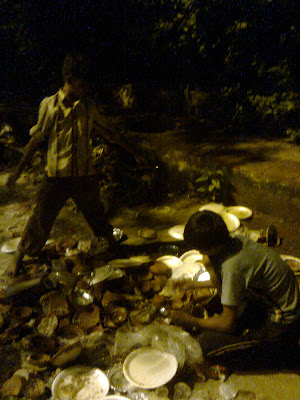
Today, I am not writing any comment on any development in India. I am just uploading a few photographs, that I took in July this year at around midnight in Delhi. This is the scene just outside the venue of a dinner party organized by people, who really represent Shining India. But, these images betray the reality of Bharat that is striving to survive on the left overs by India. I can but hardly forget the dichotomy. Hope, sentiments are understood.




 A sapien. Friend. Accidental journalist. Believe God is the greatest creation. Convinced that words, stories built human civilisation with the help of communication technology. Live in a metro with a heart of small town. Dreamer. Lover of humans, other natural things. Poetry. Philosophy. Lazy. Leisure. Beholding eyes for beauty. Life is a sentence that ends at a full stop.
Irom Sharmila: Gandhian War Against AFSPA
The anti-corruption cum government movements led by Yog Merchant Baba Ramdev and anti-graft Gandhian activist turned symbol of youth's aspirations in India, have done a world of good to a distinctly different pro-human rights struggle led by Iron Humane Lady Irom Sharmila. The forgotten struggle of Irom Sharmila seeking repeal of Armed Forces Special Power Act of 1958 has come to the fore. Irom has been on hunger strike for last 11 years but has largely remained unnoticed. Finally, the hunger strikes by people's leaders has brought the strong willed human rights crusader in the national debate. The recent hunger strikes by Ramdev and Anna have put across the board a message to Irom that a team is required to make authorities listen. And, now Team Irom Sharmila is taking some concrete shape and it seems to be taking definite cue from Anna Hazare movement against corruption.
Team Irom Sharmila has now decided to intensify the movement in midst of ongoing blockade in Manipur for more than two months-- by Sadar Hill District Demanding Committee and a counter blockade by United Naga Council. The economic blockade of the national highways connecting Manipur with the rest of the Northeast has created an acute shortage of essential commodities in the state. LPG is selling at Rs 2000 while petrol is selling at over Rs 160, potatoes at over Rs 50 a kg and tomatoes nearly Rs 80 a kg. Even the life saving medicines are hard to find. Team Sharmial wants to exploit the prevailing situation to bring forth their demand for repeal of AFSPA which has made life of ordinary citizens in the state equally vulnerable. Sharmila supporters claim that under the AFSPA rule, an average of two to three persons are being killed by the armed forces and no action is being taken against them.
The Armed Forces Special Powers Act was legislated in 1958 to fight the internal armed rebels. The AFSPA was aimed at meeting the challenges posed by the Naga insurgency in the erstwhile NEFA. It was later extended to entire northeast and in Jammu and Kashmir in 1990, after emergence of terrorism sponsored by Pakistan. But, its imposition in peace time has met with resistance from the human rights activists but the government has maintained that the Act is necessary to keep the disturbing forces in check. The insurgents and separatists in both regions have used the government's decision to impose AFSPA as tool to alienate the resident population.
In Manipur, Sharmila took the cudgels to challenge the might of the government and her method has always been Gandhian, shorn of violence, concrete in belief and consistent in perseverance. And, truly the movement has now drawn inspiration from another Gandhian activist, Anna Hazare, who challenged the mightiest government of the largest democracy for going away from the popular perception on corruption and its handling.
Though in certain parts of the northeast, people have tried to give it an ethnic colour by saying that the AFSPA is aimed to making people with mongoloid features suffer at the hands of rest of the mainland ethnic groups. But, Sharmila has always detested such views while terming the Act draconian. This Gandhian (consciously or not) activist needs to be dealt with in a better manner by the state and the central governments. Putting her in police custody or force-feeding her is not a way to deal with peaceful protest that the father of the nation espoused in his fight against a colonial government. Irom Sharmila is a Gandhian made of a different metal.
Team Irom Sharmila has now decided to intensify the movement in midst of ongoing blockade in Manipur for more than two months-- by Sadar Hill District Demanding Committee and a counter blockade by United Naga Council. The economic blockade of the national highways connecting Manipur with the rest of the Northeast has created an acute shortage of essential commodities in the state. LPG is selling at Rs 2000 while petrol is selling at over Rs 160, potatoes at over Rs 50 a kg and tomatoes nearly Rs 80 a kg. Even the life saving medicines are hard to find. Team Sharmial wants to exploit the prevailing situation to bring forth their demand for repeal of AFSPA which has made life of ordinary citizens in the state equally vulnerable. Sharmila supporters claim that under the AFSPA rule, an average of two to three persons are being killed by the armed forces and no action is being taken against them.
The Armed Forces Special Powers Act was legislated in 1958 to fight the internal armed rebels. The AFSPA was aimed at meeting the challenges posed by the Naga insurgency in the erstwhile NEFA. It was later extended to entire northeast and in Jammu and Kashmir in 1990, after emergence of terrorism sponsored by Pakistan. But, its imposition in peace time has met with resistance from the human rights activists but the government has maintained that the Act is necessary to keep the disturbing forces in check. The insurgents and separatists in both regions have used the government's decision to impose AFSPA as tool to alienate the resident population.
In Manipur, Sharmila took the cudgels to challenge the might of the government and her method has always been Gandhian, shorn of violence, concrete in belief and consistent in perseverance. And, truly the movement has now drawn inspiration from another Gandhian activist, Anna Hazare, who challenged the mightiest government of the largest democracy for going away from the popular perception on corruption and its handling.
Though in certain parts of the northeast, people have tried to give it an ethnic colour by saying that the AFSPA is aimed to making people with mongoloid features suffer at the hands of rest of the mainland ethnic groups. But, Sharmila has always detested such views while terming the Act draconian. This Gandhian (consciously or not) activist needs to be dealt with in a better manner by the state and the central governments. Putting her in police custody or force-feeding her is not a way to deal with peaceful protest that the father of the nation espoused in his fight against a colonial government. Irom Sharmila is a Gandhian made of a different metal.
A sapien. Friend. Accidental journalist. Believe God is the greatest creation. Convinced that words, stories built human civilisation with the help of communication technology. Live in a metro with a heart of small town. Dreamer. Lover of humans, other natural things. Poetry. Philosophy. Lazy. Leisure. Beholding eyes for beauty. Life is a sentence that ends at a full stop.
Subscribe to:
Posts (Atom)
-
 The BBC interview of the outgoing RBI governor Raghuram Rajan and his comments about the prime minister betrays the bitter relation betwee...
 -
Karna had two wives and 10 sons. Nine of them died in the Mahabharata war. Vrishali She was Karna's first wife -- a sister of Duryodhana...
-
 Prime Minister Narendra Modi at Red Fort during his Independence Day speech today. (Screengrab: DD Live Stream) Prime Minister Narendra...