Showing posts with label Politics. Show all posts

Can we have governance without politics, political parties?

Written on  22.09.19

Prime Minister Narendra Modi in Gujarat with state leaders at a political event earlier this month. (Photo: Twitter/@narendramodi)
Politics is the last resort of scoundrels. George Bernard Shaw, noted Irish playwright and social influencer of his time, came to this conclusion on the basis of his experiments with politics in late 19th and first half of the 20th centuries. Perception of people today is not much different. So, what about making India free of scoundrels or shrinking place for them to the minimum?

Political class in India don't necessarily convey their role as lawmakers. For aam aadmi, politicians as a class are those who rule over people. They are government. Constitutionally speaking, they are executive. Those outside executive don't really matter much. And, their own efforts are also meant only to get to that power of rule. Rule of law isn't in focus till they become the executive.

Is it not the time for a fundamental amendment in the Constitution?

Let's first consider the role of the executive in India. They are the political class winning mandate of people to decide what laws can be made and which need to be revoked. Plus, by virtue of the same mandate from the people, they chair various ministries, which career bureaucrats are perfectly capable of running.

Political class become ministers and take a call on a number of advices offered by domain expert bureaucrats or force their own decisions dictated by vested political or personal interests. They add a layer of already cumbersome decision-making process without having necessary expertise or qualifications.

India has seen people chairing a ministry which they did not have any idea about. And, even those with some idea were not necessarily known to smoothen the process and deliver better results. Defence ministry is a good example. No one would doubt the importance of defence ministry given the challenges India has been facing on this front.

Barring a few exceptions, defence ministry has been a parking lot for heavyweight politicians who could not be accommodated elsewhere in the executive. Expertise or interest has never been a criterion. In some cases, the incumbent defence minister eyed a home minister's or finance minister's portfolio.

External affairs ministry has not been very different from the defence ministry. But reason here is that almost all the prime ministers have taken the responsibility of foreign relation on themselves. The HRD ministry has been another bunny of the political class. It has been largely used to push one's narrative or ideology through textbook. This builds an image for a complete generation.

Wouldn't it be better to have a department without a minister with secretary of that department being made responsible and accountable? Wouldn't this be the real minimum government yet equally penetrative governance?

Role of politicians in that case would be limited to law-making for which they actually seek mandate constitutionally. The Constitution does not provide for election of a prime minister or the president. 

Under the present constitutional scheme, people vote not for a ruler of their constituency, which is already governed by a web of bureaucrats, but a representative who would debate and discuss on their behalf a proposed law or review the existing laws so that the basis of governance can be improved for public welfare ensuring safety, security, defence, opportunities for education and employment, and care in the old age and times of ill health.

The political class for some reasons -- that could not have very distant from the lure of power -- interpreted the mandate for law-making as the one for chairing ministries and become the masters of the steel-frame of bureaucracy.

There can still be a prime minister or the president to represent India abroad.

A Group of Secretaries (GoS) -- comprising of the top bureaucrats of all departments -- may be formed to take decisions on issues of national security etc.

Elections will, under that scheme, be held so that a new set of representatives could be sent to Parliament for making new laws and reviewing the existing ones.

Doesn't this present a better picture of governance with less political clutter and no political class with incorrigible sense of entitlement?

For reference, Harappa's was a very efficient civilisation with a rule of law that sustained it for about 2000 years. And, historians have not found a political class as we perceive today in Harappan civilisation. Governance without politics.

राणे, उद्धव की राड़

Union minister Narayan Rane and his bete noir Uddhav Thackeray, the Maharashtra chief minister have a history of political rivalry. (Photos: From their official Twitter handles)

नाम में क्या रखा है? लेकिन नारायण और उद्धव दोनों नामों का एक इतिहास है। नारायण विष्णु के कई नामों में से एक है। कृष्ण विष्णु के अवतार माने गए। इस लिहाज से उन्हें नारायण कहा गया। उनके एक मित्र थे, नाम था उद्धव। इनके बारे में सूरदास ने कहा है कि रूप-काया में दोनों समान थे, एक जगह रहते थे, एक-सी बात करते थे लेकिन नारायण यानी कृष्ण और उद्धव स्वभाव में विपरीत-ध्रुवी थे। 

कृष्ण और उनके मित्र उद्धव से तुलना तो कतिपय नहीं है लेकिन जैसा कि महान लोगों की कथाओं के साथ होता है कि वे दृष्टव्य बन जाते हैं, ऐसा ही होता लग रहा है। नारायण राणे और उद्धव ठाकरे भी एक ही राजनीतिक मूल के हैं। शिव सेना दोनों की जड़ है। लेकिन पौराणिक प्रतिस्पर्धा कर उद्धव नारायण कृष्ण तो नहीं बन पाए लेकिन आज के महाराष्ट्र के उद्धव ठाकरे नारायण राणे से कंपीट कर उनपर भारी पड़ गए।

राणे के बारे में कहते हैं कि वे 1960 के दशक में हरिया-नारिया-गैंग के मेंबर थे। यह गैंग तब के बॉम्बे के चेम्बूर में स्ट्रीट फ़ाइट के लिए जाना जाता था। राणे गैंग से निकलकर 1970 के दशक में शिवसेना का हाथ पकड़ लिया। उस वक़्त बाल ठाकरे बड़ी तेज़ी से उभर रहे थे।

बहुत जल्दी राणे बाल ठाकरे की शिव सेना में शाखा प्रमुख बन गए। यानी एक स्थानीय यूनिट के नेता। और, 1980 के दशक में तो शिव सेना के टिकट पर कॉरपोरेटर भी बन गए। जब 1990 का दशक आया और बीजेपी से जुड़ी पार्टियाँ शासन में आने लगी तो राणे शिव सेना के बड़े नेता बन चुके थे। बाल ठाकरे, राज ठाकरे, मनोहर जोशी जैसे नेताओं के बाद राणे की गिनती होने लगी थी। साल 1999 में तो वे महाराष्ट्र के मुख्यमंत्री भी बने।

हालाँकि जब वे मुख्यमंत्री बने तो बाल ठाकरे का पुत्र-प्रेम उनकी बुज़ुर्ग़ियत पर हावी होने लगा था। राज ठाकरे भी किनारे किए जाने लगे थे। उद्धव ठाकरे जो वर्षों राजनीति से दूर रहने के बाद पार्टी में सक्रिय हो गए थे अमूमन बैकग्राउंड में रहकर काम कर रहे थे। कुछ लोग तो कहते थे कि उद्धव ठाकरे को मराठी भी अच्छे से बोलनी नहीं आती थी।

लेकिन अंग्रेज़ी की कहावत — रक्त जल से गाढ़ा होता है — की राह पर शिव सेना का भविष्य चल पड़ा था। यह कहावत महज़ एक भौतिकी के तथ्य को नहीं बताता है, इसका झन्नाटेदार ज्ञान राणे और राज ठाकरे को हो चुका था। राणे का तो छोड़िए, राज ठाकरे की स्थिति की कल्पना करिए।

राजनीतिक तौर पर एक बड़ा मज़ेदार वाकया मुझसे पुराने पत्रकार सुनाया करते हैं। घटना 1999 की है। महाराष्ट्र में चुनाव था। राणे समेत कई नेताओं की मेहनत से एक लिस्ट बनी कि कौन कहाँ से चुनाव लड़ेगा या लड़ेगी। उद्धव के पास फ़ाइनल लिस्ट पहुँची। उन्हें 15 नाम नहीं जँचे। बदल दिए गए।

नारायण राणे भड़क गए कि ऐसा कैसे। आख़िरकार वे मुख्यमंत्री थे। और, उद्धव बाल ठाकरे के लड़के। लेकिन राणे की शिकायत के बावज़ूद उद्धव के काटे नाम वापस नहीं जोड़े गए। नाम-कटुआ नेताओं ने अलग से पर्चा भरा, निर्दलीय उम्मीदवार के रूप में। मज़ेदार बात यह रही कि 15 में से 12 जीत गए। राणे चौड़े हो गए। लेकिन उद्धव का वज़न बढ़ता ही चला गया।

साल 2003 में बाल ठाकरे के आशीर्वाद से उद्धव ठाकरे, राज ठाकरे द्वारा प्रस्तावित होकर शिव सेना प्रमुख बन गए। कहते हैं कि नारायण राणे को यह बात इतनी चुभी कि सीधे बाल ठाकरे से मिले और अपनी नाराज़गी जताई। बाल ठाकरे राणे को प्यार करते होंगे नहीं तो उन्हें इसके बाद भी दो साल तक पार्टी में टिके तो नहीं रहने देते। उनकी पसंद, उनका वचन, पार्टी में उनका शासन और उनके बेटे को चुनौती तो दी ही थी राणे ने।

ख़ैर, राणे की उद्धव से अदावत चलती रही। उद्धव जीतते रहे और नारायण हाशिए पर छिटकते रहे। साल 2005 में, राणे ने उद्धव ठाकरे को चिट्ठी लिखी ये कहने के लिए उनके नेतृत्व वाली शिव सेना बाल ठाकरे की शिव सेना नहीं है। इसमें शिव सैनिकों को प्यार और सम्मान नहीं मिलता है।

उसी चिट्ठी में राणे ने इस्तीफ़ा भी दे दिया। इसका जवाब बाल ठाकरे ने अगले दिन एक ऑडिटोरियम में दिया। राणे को पार्टी से निष्कासित करके। 

मुझे आज तक यह बात समझ नहीं आई है कि राजनीतिक दल के नेता इस्तीफ़ा दे चुके बाग़ियों को पार्टी से निकालते क्यों हैं। पता नहीं, इसके पीछे सिर्फ़ ईगो है या कोई राजनीतिक-क़ानूनी गाँठ।

बाल ठाकरे ने कहा कि राणे ने पार्टी के साथ धोखा किया। वैसे, विरोध तो पुत्र का हुआ था। राणे ने कहा कि पुत्र-मोह हर बात से ऊपर हो चुकी थी। शिव सेना के भीतर राणे के कई उर्फ़ रख दिए गए।

दो उपनाम बड़े चटकारे के साथ लिए जाते थे। नागोबचो पिल्लू और कोम्ड़ी चोर। नाग हुआ साँप, पिल्लू बच्चा, कोम्ड़ी यानी मुर्ग़ी। दरअसल, हरिया-नारिया-गैंग से पहले चेम्बूर में नारायण राणें मुर्ग़ियों की दुकान चलाते और चलवाते थे। इसलिए मंगलवार को जब उनके उद्धव को थप्पड़ मारने वाले बयान पर हंगामा बरपा तो कई शिव सैनिक मुर्ग़ी लेकर प्रदर्शन करते वीडियो में दिखे।

राणे का परिवार भी कम नहीं। उन्होंने बाल ठाकरे के बारे में तो बहुत कुछ नहीं कहा लेकिन उद्धव ठाकरे और उनके बेटे आदित्य ठाकरे को ख़ूब सुनाया है। आदित्य ठाकरे के लिए 'बेबी पेंग्विन' का नाम राणे परिवार से ही फेंका गया बताया जाता है। मंगलवार को भी राणे ने कहा कि सुशांत सिंह राजपूत और दिशा सालियान की मौत से आदित्य ठाकरे का संबंध है। उद्धव ठाकरे को घर कोम्बड़ा कहा। माने, घर-घुसना। 😉

Arun Jaitley says Priyanka Gandhi 'won't take off'. Is BJP really nervous?

Is Priyanka Gandhi Vadra really a threat to the BJP's prospects in 2019 or in the years to come?

Union Finance Minister Arun Jaitely has taken a dig at the Congress party which recently appointed Priyanka Gandhi Vadra as the party general secretary in-charge of Uttar Pradesh East in his latest blog post. Jaitley hit out at the Congress saying that the party has been trying “to convert India to a dynastic democracy.”

“Generation after generation, the Congress Party’s leadership berth is reserved for a member of the preferred family. When the Party is now in doldrums, another member of the family has entered the scene,” said Jaitley referring to Priyanka Gandhi’s entry into politics. He, however, did not mention Priyanka Gandhi’s name.

Priyanka Gandhi was given the responsibility of eastern Uttar Pradesh in January this after the Samajwadi Party and the Bahujan Samaj Party left the Congress out of their alliance for the Lok Sabha election. Priyanka Gandhi’s political activities were limited to only two constituencies of Amethi and Rae Bareli, represented by brother and Congress president Rahul Gandhi, and mother Sonia Gandhi, the UPA chairperson.

Her appointment assumes significance with the Congress emphasising on rebuilding the party’s organisation in Uttar Pradesh, especially in the eastern part. Prime Minister Narendra Modi and Uttar Pradesh Chief Minister Yogi Adityanath are elected to the Lok Sabha and Vidhan Sabha respectively from this region.

Many in the Congress described Priyanka Gandhi’s entry into active politics as a “game-changer” for the Lok Sabha election in April-May. Jaitley, however, dismissed the enthusiasm of the Congress party.

He said, “It (the Congress) believes that two owners are better than one…One failed. The other won’t take-off.”

The Union finance minister’s comments were made in the fifth part of a series of blog posts on “Agenda 2019”, wherein he claimed that “Prime Minister Modi and aspirational India will prevent India from becoming a dynastic democracy”.

This is a typical news piece. But why denounce someone whom you consider a non-starter? And, why worry about some rival who has "failed"?

I firmly believe that Sonia Gandhi and the Congress led by her gave Narendra Modi the stature that he enjoys today. After the 2004 electoral loss of Vajpayee-Adani's BJP, Narendra Modi was reeling under pressure. A leader no less than Vajpayee had indirectly blamed Narendra Modi's failure to effectively bring riot situation under control with the speed expected of the government for the loss in 2004.

After Vajpayee-Advani, Sushma Swaraj was their biggest leader. Shivraj Singh was fast gaining control over Madhya Pradesh BJP after becoming the chief minister in 2005. His state was bigger than the one under Modi, who was still facing challenges in Gujarat.

The 2002 assembly election win in Gujarat had been credited to the surcharged atmosphere in the backdrop of Godhra incident-2002 riots. The next election was being considered as a tough ask for Modi in 2007 as even Advani, who was a tall leader from the state capital was on a downslide. Modi was not believed to be on good terms with the RSS leadership.

In came Sonia Gandhi and spoke those words - Maut Ka Saudagar. The rest is history. Modi, now we all know what he can do with phrases - Achchhe Din was not his invention, it was a phrase coined by Manmohan Singh for 2014 polls - turned the Maut Ka Saudagar comment into the last nail in the Congress's coffin in the state for years to come.

The Congress has not been able to remove that nail from its coffin in Gujarat. It was not 2002 but 2007 Gujarat election that established Narendra Modi as a leader with a 'mission', the next poster boy of the Hindutva brigade.

Not too many people can actually distinguish between Hindutva and Hinduism. Modi became the pole bearer and 'saviour' for the Hindus in Gujarat. Sonia Gandhi created a wedge and forced it down the fissure between two communities who were coming to terms. She opened up the wounds and left them open.

The situation simply paved the way for Modi's political growth. Advani had practically lost the sheen and was wavering. Sushma Swaraj was mild to the Hindutva followers. Modi appeared acceptable because even those who thought he was 'hard core' did not have an acceptable alternative.

Practically, Sonia Gandhi created TINA (there is no alternative) factor for Narendra Modi. This also explains why he keeps targeting Sonia Gandhi and her family. He attained all his success till 2014 election that way.

Arun Jaitley may be doing a Sonia to Priyanka Gandhi. However, one big difference is that Jaitley is one of those rare politicians in India who still believe in subtlety while targeting their opponents. When he calls Rahul Gandhi a "liar", Jaitley makes sure he does not take his name. His common refrain in such situations is "this gentleman".

One can easily see the difference between Jaitley and others when they brand their opponents as liars. I initially thought Rahul Gandhi would be different. He is not. He claims he does not hate Narendra Modi. But his temper flies when he talks about Modi. You can easily notice the change in his tone. "Narendra Modi jhooth bolta hai", you must have heard him telling his audiences many a time. "Saare choron ke naam Modi kyon hote hain," is another example. Just notice the anger when he says so. He looks no different from Modi's disdain towards Nehru-Gandhi family.

Priyanka Gandhi may be a little different. She has been brief and more subtle in her short career as an electioneer. Jaitley might have noticed this. I clearly remember that Jaitley was one of the early promoters of Narendra Modi.

In 2006/07 or 2008, I don't recall the date, Jaitley had told an informal gathering of BJP reporters - I was part of that group then - that Narendra Modi's "biggest strength is his brain". He is very sharp, Jaitley had said then. Now, many officers say that he would ask questions which most politicians fail to notice.

Does this explain why Jaitley is targeting Priyanka Gandhi? Does he believe that she might have a sway over people of India, if not in 2019 then over the next few years? Read his blog and make up your own mind.

Why Rahul Gandhi should bury his PM dream for 2019


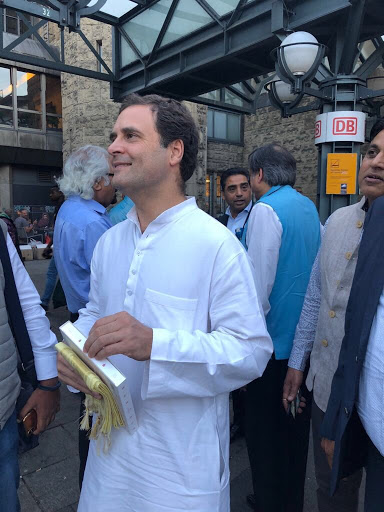
Congress president Rahul Gandhi during his Germany tour in August 2018. (Photo: Twitter/@RahulGandhi)
During his Karnataka Assembly campaign Congress president Rahul Gandhi had said: The deadliest thing in Indian politics is Opposition unity. It will smash everything in its path. Mister Rajiv Gandhi had 415 seats and 40 per cent of the vote (in 1984 election) but he could not withstand Opposition unity.

Rahul Gandhi's statement reflected Congress's desire to achieve Opposition unity to test the BJP in 2019 election. The Congress, first under Sonia Gandhi and now under Rahul Gandhi, has been aspiring to assume the role of a unifier and a leader of the Opposition bloc. But, the Monsoon Session of Parliament showed that the Congress or Rahul Gandhi may not be the rallying point for the entire Opposition.

The Congress received two setbacks in three weeks over 18 sittings of the Monsoon Session. On July 20, the no-confidence motion - moved by the TDP but only after Congress's approval - was soundly defeated in the Lok Sabha. Twenty days later, Congress could not get enough support for its candidate BK Hari Prasad in the election for the deputy chairperson of the Rajya Sabha.

Defeat of the no-confidence motion in the Lok Sabha looked certain given the number of MPs the BJP has in the House. But going into trial of strength in the Lok Sabha, Congress leader Sonia Gandhi had thrown a challenge saying, "Who says we don't have numbers?" The House said so. But more than the defeat of the no-confidence motion, it was poor managerial skills that should rankle the Congress.

The Shiv Sena has been utterly unhappy with the BJP. It is fighting its oldest ally, the BJP, every other day. But the Congress failed to win over the sulking party leadership. Rahul Gandhi did not even reach out to the Shiv Sena chief Uddhav Thackeray. Shiv Sena abstained during voting on no-confidence motion. The BJD also stayed away from voting while the AIADMK voted against the motion. They are non-NDA parties. Rahul Gandhi failed to bring them on his side. No initiative was visible from his side.

During the Rajya Sabha deputy chairperson election on August 9, again an unhappy Shiv Sena voted with the NDA partners. The BJD, AIADMK and TRS voted for the NDA nominee Harivansh. Rahul Gandhi again faltered by not approaching these parties for support - not even the YSR Congress, which abstained from voting.

The Congress under Rahul Gandhi is showing signs of rigidity under false notion of its muscular strength in many states. Odisha is a classic example. The BJD has been in power in Odisha for 18 years. The BJP has emerged as the principal challenger to the BJD in Odisha. The Congress is definitely the number three. 

Yet, Prime Minister Narendra Modi and BJP president Amit Shah manage to get support of the BJD in Parliament while Rahul Gandhi does not seem inclined to reach out to Naveen Patnaik, the Odisha chief minister. Rahul Gandhi seems to harbour misplaced belief that the Congress can win back power in Odisha.

Delhi is another example. Delhi Chief Minister and AAP boss Arvind Kejriwal is a bitter critic of PM Modi and the BJP but Rahul Gandhi has not shown any inclination till date to have him on board to stitch Opposition unity. Congress heavyweights like Ajay Maken in Delhi seem to give a false hope to Rahul Gandhi that the party can win the next Assembly election here. 

The party had been reduced to naught in 2015, when only eight Congress candidates had succeeded in saving their deposits. Even Sheila Dikshit, the then chief minister, had lost her deposit to Arvind Kejriwal, who has been extremely critical of PM Modi and the BJP. Still, Rahul Gandhi and the Congress have treated Arvind Kejriwal as political outcaste. 

In the case of Uttar Pradesh, Rahul Gandhi's "friendship" with SP president Akhilesh Yadav broke as soon as BSP chief Mayawati agreed to fight together. The SP-BSP alliance defeated the BJP even while ignoring the Congress. 

The SP and BSP are going to fight together in Madhya Pradesh. They are likely to have alliance with local Gondwana Gantantra Party but the Congress is not in their scheme of things. Rahul Gandhi has not dropped any hint of accommodating these parties, which have influence in certain pockets of Madhya Pradesh. The Congress is faction-ridden in Madhya Pradesh, where the BJP is seeking a fourth consecutive term in power.

The Congress's relation with the NCP is not smooth. The NCP is ready to extend support to the minority BJP government despite having shared power with the Congress both in the state and at the Centre. NCP chief Sharad Pawar has repeatedly hinted that he wants a free hand in mobilising Opposition parties against the BJP, but Rahul Gandhi does not seem to be comfortable. 

The CPI-M has passed a resolution stating that it would have no arrangement with the Congress for election or other political purposes. The TMC is not ready to let Rahul Gandhi assume the leadership role for the entire Opposition. 

In Parliament, both the NCP and the TMC tried to show their independent anti-BJP credentials than being a partner of the Congress. Even the TDP tries to maintain distance from Rahul Gandhi's Congress in Parliament.

Rahul Gandhi, at present seems to have only one unflinching alliance partner in the form of Tejashwi Yadav of the RJD. Omar Abdullah of the National Conference is another leader, who supports Rahul Gandhi but that seems more personal than political. 

On the other hand, PM Modi and Amit Shah have managed to keep the allies together. If Odisha is a demonstration of how Rahul Gandhi has failed to show political maneuverability, Bihar showcases Amit Shah's ability to keep the allies together. Despite the JDU's reentry in the NDA last year, the BJP keeps holding the LJP and RLSP in the fold.

With twin failures in Parliament in 20 days, Rahul Gandhi now has a huge challenge to win Assembly elections in Rajasthan, Madhya Pradesh, Chhattisgarh and Mizoram later this year. If he fails to win these elections, he would have to bury his own dream - acknowledged during Karnataka Assembly polls - of becoming the prime minister in 2019.

(This was originally written for Indiatoday.in but somehow, it did not pass the editorial test. I am just posting it on my blog to keep this use-less piece for record.)

5 numbers linked to ideal heart health